


7007 Islington Avenue, Unit 207, Woodbridge, ON L4L 1V8
If you’ve spotted tiny invaders marching across your kitchen counter or discovered a colony thriving in your backyard, you’re not alone. Toronto homeowners deal with various ant species throughout the year, each with unique behaviours and challenges. Understanding which type of ant has invaded your space is the first step toward effective management and prevention.
While ants play important ecological roles outdoors, they become problematic when they move indoors seeking food, water, or shelter. Some species cause structural damage, others contaminate food supplies, and a few can deliver painful stings. This comprehensive guide will help you identify the most common ant species in Toronto, understand their behaviour patterns, and learn practical strategies for keeping them out of your home.
Whether you’re dealing with a minor nuisance or a full-blown infestation, knowing your enemy makes all the difference. Let’s explore the fascinating (and sometimes frustrating) world of Toronto’s ant populations.
Understanding Ants: The Basics
Ants are highly organized social insects belonging to the family Formicidae. With over 12,000 known species worldwide and approximately 1,000 species in North America, these ancient insects have existed for over 100 million years. They live in colonies ranging from dozens to millions of individuals, working together in complex social structures that include queens, workers, and males.
Ant Anatomy and Physical Identification
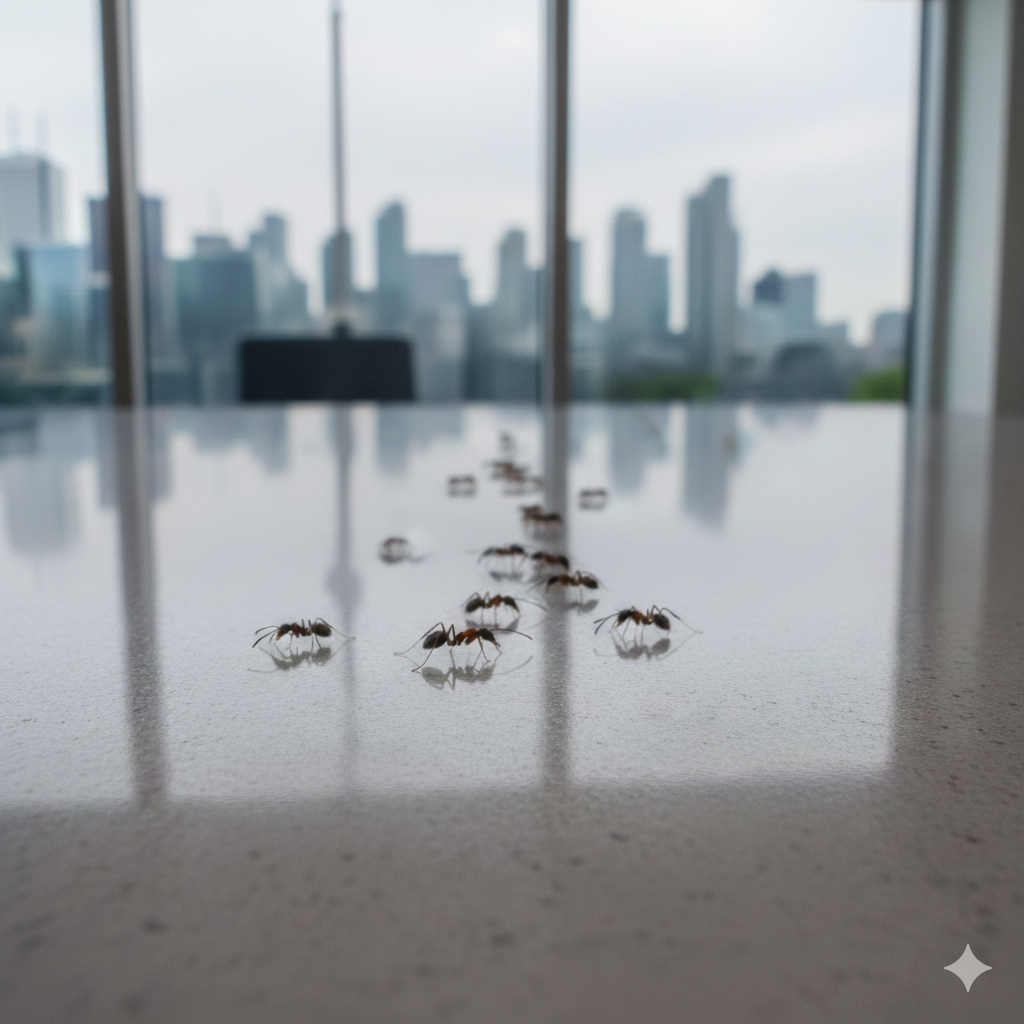
All ants share distinctive anatomical features that set them apart from other insects. Their bodies consist of three main segments: the head (containing compound eyes, elbowed antennae, and mandibles), the thorax (where six legs attach), and the abdomen. The most recognizable feature is the petiole, a narrow waist segment with one or two nodes connecting the thorax to the abdomen. This characteristic, along with their distinctively bent antennae, makes ants easily identifiable.
Ants range dramatically in size from tiny 1.5mm thief ants to massive 13mm carpenter ants, with colors spanning pale yellow, brown, red, and black.
Common Ant Types
Carpenter Ants (6-13mm, black/red) are North America’s largest and most destructive species, excavating moisture-damaged wood for nesting galleries.
Pavement Ants (2.5-4mm, dark brown) nest under concrete surfaces and create small dirt mounds along driveways and foundations.
Pharaoh Ants (2mm, yellow-brown) are tiny indoor pests that fragment into multiple colonies when threatened, making them extremely difficult to eliminate.
Odorous House Ants (2.5-3mm, dark brown) emit a distinctive rotten coconut smell when crushed and create extensive foraging trails indoors.
Thief Ants (1.5-2mm, yellow) are extremely small, nesting near other colonies to steal food and larvae, with their tiny size allowing access through the smallest openings.
Acrobat Ants (2.5-4mm, light brown to black) have heart-shaped abdomens and raise them over their bodies when disturbed, often nesting in wood previously damaged by other pests.
Cornfield Ants (2.5-4mm, light brown) primarily nest outdoors and “farm” aphids for honeydew, occasionally entering buildings during extreme weather conditions.
Argentine Ants (2-3mm, light brown) form massive supercolonies with millions of workers, displacing native species.
Why Identification Matters
Proper ant identification is crucial because different species require completely different control strategies. Carpenter ants need targeted treatments at colony locations, while pharaoh ants require specialized approaches to prevent colony fragmentation. Misidentification wastes time, money, and leads to ongoing frustration.
Professional pest control technicians always begin with accurate species identification using microscopes, identification keys, and behavioral observation. For persistent infestations or difficult species, professional expertise ensures effective, lasting control tailored to the specific ant type invading your property.
To learn how each ant species is treated in Toronto homes, check out our in-depth resource on Ant Pest Control Toronto: Signs, Solutions, and Prevention Strategies Explained.
Carpenter Ants: Toronto’s Most Destructive Species
When Toronto residents worry about ant damage, they’re usually concerned about carpenter ants. These large ants are among the most problematic species in the region, and for good reason.
How to Recognize Them
Carpenter ants are the giants of the local ant world, measuring between 6 to 13 millimeters in length. They’re typically black, though some species have reddish-brown coloring or bicolored patterns with red and black segments. Their bodies are smooth and evenly rounded when viewed from the side, and they have a single node (bump) between their thorax and abdomen.
One distinctive feature is their heart-shaped head when viewed from above. If you look closely, you’ll also notice they have elbowed antennae, which is common among many ant species but particularly noticeable on these larger insects.
Behaviour Patterns and Habits
Unlike termites, carpenter ants don’t eat wood; they excavate it to create their nests. They’re attracted to moist, decaying wood, which is why they often establish colonies in areas with water damage, roof leaks, or poor ventilation. Once established, they’ll expand their galleries into sound wood, potentially causing significant structural issues over time.
These ants are most active during spring and early summer when winged reproductive ants emerge for their mating flights. You might notice increased activity during warm evenings when workers forage for food. They’re particularly attracted to sweet substances and proteins, often traveling considerable distances from their nest to find food sources.
Carpenter ants establish both parent and satellite colonies. The main colony contains the queen and developing young, while satellite colonies house workers and mature larvae. This makes elimination challenging because treating only the satellite colony won’t solve the problem.
Signs of a Problem
The most obvious indicator is seeing large black ants regularly, especially if you notice them during the winter months when they should be dormant. Finding piles of fine sawdust (called frass) near wooden structures is another telltale sign. This material looks like pencil shavings mixed with insect body parts.
You might also hear a faint rustling sound inside the walls during quiet moments, this is the sound of thousands of ants moving through their galleries. Winged ants emerging indoors during spring is a serious warning sign indicating an established colony within your home’s structure.
Pavement Ants: The Driveway Dwellers
If you’ve noticed small brown ants creating tiny dirt mounds between the cracks of your driveway or sidewalk, you’ve encountered pavement ants.
Identifying Features
Pavement ants are relatively small, measuring about 2.5 to 4 millimeters long. They’re brown to black with lighter-colored legs. Under magnification, you’ll see parallel grooves on their heads and thorax; a unique identifier for this species. They have a two-segmented node between their thorax and abdomen.
Where They Live and What They Do
True to their name, these ants typically nest under pavement, concrete slabs, sidewalks, and building foundations. They create colonies in the soil beneath these structures, pushing excavated dirt up through cracks and crevices, creating those characteristic small mounds.
Pavement ants are opportunistic feeders with diverse tastes. They eat almost anything: sweets, greasy foods, seeds, dead insects, and even pet food. This flexibility makes them successful urban colonizers.
During late spring and early summer, you might witness dramatic “ant wars” on sidewalks and driveways. These battles occur when neighboring colonies compete for territory, with thousands of ants engaged in combat. While fascinating to observe, these conflicts indicate significant ant populations in the area.
Getting Indoors
Pavement ants enter homes through tiny cracks in foundations, gaps around pipes, or spaces under doors. Once inside, they establish trails to food sources, often traveling along baseboards, pipes, and electrical wires. They’re particularly attracted to kitchens and food storage areas.
Pharaoh Ants: The Indoor Specialists
Pharaoh ants are among the most challenging pests to eliminate, making them particularly dreaded by homeowners and pest control professionals alike.
What They Look Like
These tiny ants measure only 1.5 to 2 millimeters in length, making them one of the smallest species you’ll encounter. They’re pale yellow to reddish-brown with slightly darker abdomens. Their small size allows them to infiltrate even the most secure food containers.
Why They’re So Problematic
Pharaoh ants have adapted to thrive exclusively indoors in northern climates. They require warm temperatures and constant food access, making heated buildings perfect habitats. They establish colonies in the most inaccessible locations: inside walls, behind baseboards, in electrical outlets, and even between sheets of paper.
What makes these ants truly difficult to control is their budding behavior. When threatened or exposed to certain pesticides, colonies split into multiple new colonies, a survival strategy that actually spreads the infestation rather than eliminating it. This means that improper treatment can make the problem exponentially worse.
Pharaoh ants are particularly concerning in healthcare facilities and food processing environments because they can transmit disease organisms. They’re attracted to a wide variety of foods but show particular preference for sweets, oils, and proteins.
Managing Infestations
Successful control requires professional-grade baiting strategies that allow workers to carry poison back to all colony locations before the colonies can split. Sprays and repellents typically make the problem worse by triggering budding behavior.
Odorous House Ants: The Coconut-Scented Invaders
These small ants get their name from the distinctive smell they release when crushed, often compared to rotten coconuts or blue cheese.
Recognition and Characteristics
Odorous house ants are brown to black and measure 2.5 to 3 millimeters long. They have uneven thoraxes when viewed from the side and a single hidden node (you can’t see it without dissection). The most reliable identification feature is that distinctive odor, though you probably don’t want to crush enough ants to confirm the species this way.
Nesting and Behavior
These ants are adaptable nesters, establishing colonies both indoors and outdoors. Outside, they nest under stones, in mulch, beneath landscaping materials, or in tree cavities. When they move indoors, often driven by weather changes or food availability; they nest in wall voids, around water pipes, beneath flooring, and inside insulation.
Odorous house ants form large colonies with multiple queens, sometimes numbering over 100,000 individuals. They establish extensive trail networks and can quickly adapt to changing conditions. When their outdoor nests are disturbed by rain or temperature extremes, entire colonies may relocate indoors.
They’re strongly attracted to sweet substances and will aggressively defend their food sources. You’ll often find them trailing to spills, pet food bowls, or anywhere moisture accumulates.
Argentine Ants: The Supercolony Invaders
These invasive ants have revolutionized the concept of ant warfare by forming massive supercolonies where millions of workers from different nests cooperate instead of competing, a behavior almost unheard of in the ant world.
Recognition and Characteristics
Argentine ants are light to dark brown and measure 2 to 3 millimeters long. They have a single node on their petiole and relatively uniform coloration across their body. When crushed, they emit a musty, slightly greasy odor. Their small size and quick, erratic movements along established trails make them easily noticeable when foraging indoors. Unlike many ant species, they lack the ability to sting but will bite when threatened.
Nesting and Behavior
These ants are master colonizers that create interconnected supercolonies containing multiple queens and millions of workers spread across vast territories. A single supercolony can extend for miles, with numerous shallow nests located in moist environments under stones, in mulch, along foundations, in potted plants, and beneath debris. Indoors, they nest in wall voids, under floors, and near moisture sources like bathrooms and kitchens.
Argentine ant colonies are extraordinarily resilient because of their unique social structure. If one nest is destroyed, workers simply relocate to nearby connected nests within the supercolony. They don’t fight with genetically unrelated Argentine ants from the same introduced population, allowing them to dominate territories by sheer numbers rather than territorial warfare.
They’re strongly attracted to sweet substances and establish prominent foraging trails with hundreds of workers moving in organized lines. These trails often follow edges along foundations, sidewalks, and building perimeters. Their aggressive foraging behavior and sheer population size allow them to displace native ant species, disrupting local ecosystems and making them one of the world’s most successful invasive species.
Thief Ants: The Sneaky Neighbors
Also called grease ants, these tiny insects often go unnoticed until their population explodes.
Size and Appearance
Thief ants are extremely small, just 1.5 to 2 millimeters in length, making them easily overlooked. They’re pale yellow to bronze in color with a distinctly two-segmented club on their antennae. Their tiny size allows them to exploit food sources that other ants cannot access.
Unique Lifestyle
These ants earned their “thief” name because they often nest near larger ant colonies and steal their food and brood. In nature, they’re found nesting in soil, under rocks, or in decaying wood. Around homes, they nest in tiny crevices, behind baseboards, and inside cabinets.
Unlike most ants that prefer sweets, thief ants are attracted to high-protein and greasy foods. They’ll readily invade pantries seeking oils, cheeses, meats, and nuts. Their small size lets them penetrate seemingly sealed food containers.
Acrobat Ants: The Defensive Performers
These ants get their distinctive name from their unusual defensive posture.
Distinctive Features
Acrobat ants range from 2.5 to 4 millimeters long and can be light brown to black. The identifying feature is the heart-shaped abdomen that they can raise above their thorax when disturbed reminiscent of an acrobat’s performance. They also have a two-segmented node connecting their thorax and abdomen.
Nesting Preferences
Acrobat ants prefer to nest in moist wood, particularly wood that’s already been damaged by carpenter ants or termites. They’ll also nest in foam insulation, making them common in modern energy-efficient homes. Outside, they nest under stones, in logs, or in tree stumps.
When their outdoor nests become overcrowded or conditions deteriorate, they migrate indoors through cracks, gaps around windows and doors, or along tree branches that touch the house. They’re particularly attracted to sweets but will also feed on proteins and dead insects.
Cornfield Ants: The Outdoor Specialists
While primarily outdoor ants, cornfield ants occasionally wander indoors, causing confusion among homeowners.
Identification
These small ants measure 2 to 3 millimeters and are light to medium brown. They have a single node and lack spines on their thorax. They’re often mistaken for other small brown ant species, but their behavior patterns help with identification.
Habitat and Habits
Cornfield ants create nests in soil, often in lawns, gardens, and open areas. They’re known for tending aphids, scale insects, and mealybugs farming these insects for their sweet honeydew secretions. If you notice ants climbing your plants and tending small insects, you’re likely looking at cornfield ants.
They rarely establish permanent indoor colonies but may enter homes during hot, dry weather seeking moisture. They’re attracted to sweets and will trail to sugar sources if they find their way inside.
Seasonal Activity Patterns
Understanding when different ant species are most active helps with identification and management strategies.
Spring: This is the peak activity season for most Toronto ant species. Carpenter ants emerge from winter dormancy, and you’ll see winged reproductive ants taking flight. Pavement ants become visible as temperatures rise, creating those characteristic mounds. This is the ideal time for preventive treatments.
Summer: Ant activity remains high through the warm months. Colonies are at peak population, and foraging activity intensifies. Outdoor species may venture indoors seeking water during dry spells. You’ll notice increased trailing behavior as workers search for food to support growing colonies.
Fall: As temperatures drop, many outdoor ant species seek shelter, sometimes leading to increased indoor invasions. Colonies begin preparing for winter, stockpiling food resources. This is when many homeowners first notice ant problems that have been developing all season.
Winter: Most outdoor species become dormant, but indoor-dwelling species like pharaoh ants remain active year-round in heated buildings. If you see large black ants during winter, it strongly suggests a carpenter ant colony within your home’s heated structure, a serious concern requiring immediate attention.
Prevention Strategies That Actually Work
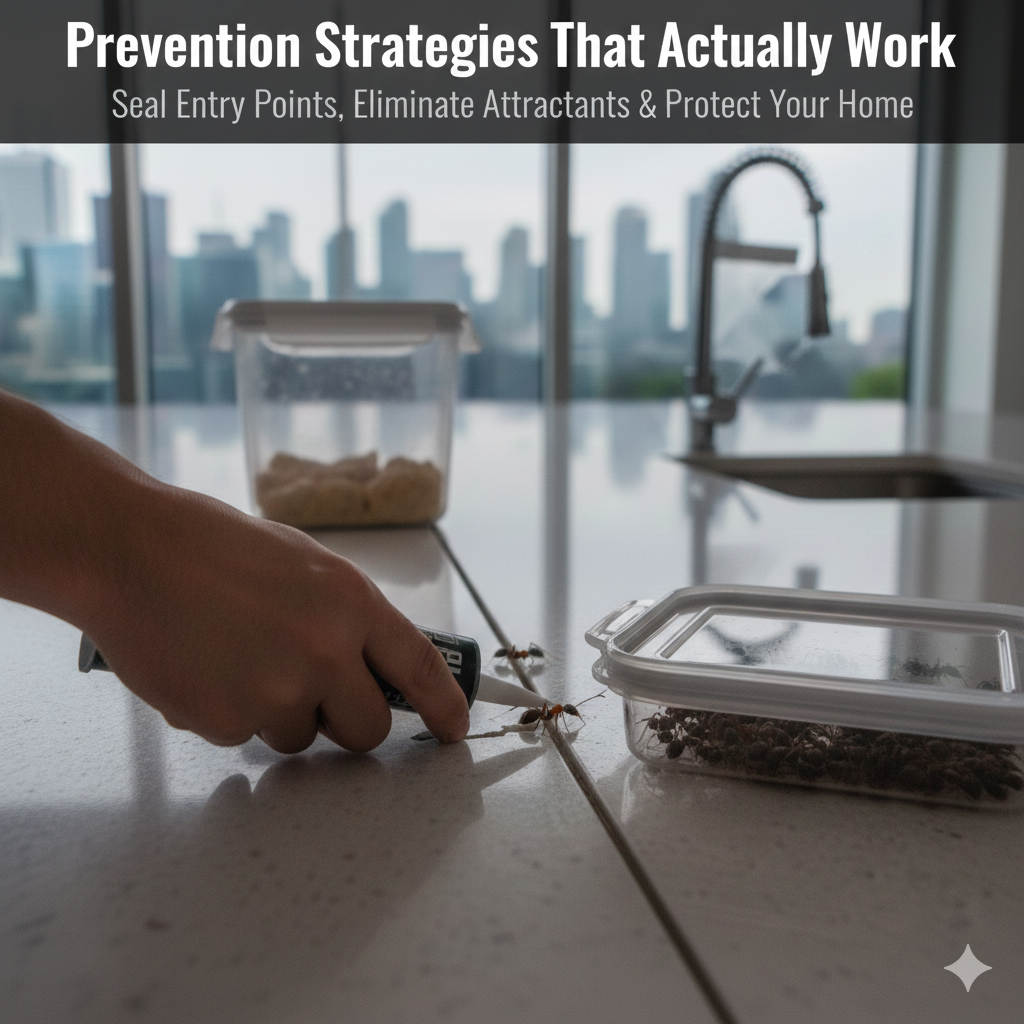
Preventing ant invasions is far easier than eliminating established colonies. Here are practical strategies that make a real difference.
Eliminate Food Sources
Ants need food, and even tiny crumbs can sustain a colony. Store all food in sealed containers, especially sweets and oils. Clean spills immediately and don’t leave dirty dishes overnight. Keep pet food bowls clean and consider storing pet food in sealed containers between feedings.
Take out the trash on time and use bins that seal shut. Rinse recyclables before storing them. Don’t forget about less obvious food sources like fallen fruit from trees, birdseed, and compost bins. Keep these away from your home’s foundation.
Remove Water Access
Many ant species need constant moisture. Fix leaky pipes, faucets, and appliances immediately. Ensure proper drainage around your foundation and clean gutters regularly. Keep your basement and crawl spaces dry with dehumidifiers. Address any sources of standing water in your yard.
Seal Entry Points
Ants can squeeze through incredibly tiny openings. Inspect your home’s exterior and seal cracks in the foundation, gaps around pipes and wires, and spaces around windows and doors. Install door sweeps and repair damaged screens. Trim tree branches and shrubs away from your house; these serve as highways for ant invasions.
Reduce Nesting Sites
Keep firewood stacked away from your home and elevated off the ground. Remove dead trees, stumps, and rotting wood from your property. Fix any moisture problems that create conditions attractive to wood-nesting species. Reduce mulch depth near your foundation and consider using alternative materials in those areas.
When to Call Professional Help
While minor ant problems can often be managed with over-the-counter products and diligent prevention, some situations require professional intervention.
Large Infestations: If you’re seeing hundreds of ants daily or multiple trails throughout your home, the colony is likely well-established and extensive. Professional treatments can address the scope of the problem.
Recurring Problems: If ants keep returning despite your efforts, there’s likely a hidden nest or multiple colonies. Professionals have the tools and expertise to locate and treat these hidden populations.
Structural Concerns: Any suspicion of carpenter ant damage warrants immediate professional assessment. These infestations can compromise your home’s structural integrity if left untreated.
Difficult Species: Pharaoh ants, in particular, require professional treatment. DIY attempts almost always make these infestations worse by triggering colony budding.
Peace of Mind: Professional pest control companies offer warranties and follow-up treatments, ensuring the problem is fully resolved. They can also identify conducive conditions and provide recommendations for long-term prevention.
Conclusion
Understanding the types of ants commonly found in Toronto is your first step toward effective management and prevention. From destructive carpenter ants excavating your home’s structure to persistent pharaoh ants establishing colonies in your walls, each species presents unique challenges requiring specific approaches.
The key to successful ant control lies in accurate identification, understanding behaviour patterns, eliminating attractants, and knowing when professional intervention is necessary. While seeing a few ants doesn’t necessarily signal disaster, recognizing warning signs early can prevent minor nuisances from becoming major infestations.
Remember that ants are persistent, resourceful, and incredibly successful at exploiting opportunities. Your best defense is maintaining a clean, dry, well-sealed home that doesn’t offer the food, water, and shelter these insects seek. Regular inspection and proactive prevention are far more effective and less expensive than dealing with established colonies.
If you’re facing an ant problem that’s beyond simple prevention measures, don’t hesitate to consult with pest control professionals who understand Toronto’s specific ant species and can develop targeted treatment plans.
FAQs Section
1. What are the most common ant species found in Toronto homes?
Toronto commonly encounters carpenter ants, pavement ants, pharaoh ants, odorous house ants, thief ants, acrobat ants, cornfield ants, and occasionally Argentine ants. Each species has unique nesting habits, food preferences, and risk levels, making proper identification essential for applying the right treatment and avoiding ineffective or harmful DIY control methods.
2. How can I tell which type of ant is invading my home?
Identification involves observing size, color, body shape, behavior, and nesting patterns. Carpenter ants are large and black, pavement ants create soil mounds, pharaoh ants are tiny and yellow, and odorous house ants smell like rotten coconut when crushed. Species-specific traits guide correct control strategies.
3. Why is proper ant identification so important?
Different ant species require completely different control methods. Pharaoh ants worsen with sprays, carpenter ants need nest-targeted treatments, and pavement ants respond to perimeter control. Misidentifying the species leads to ineffective treatments, wasted money, and repeated infestations, making accurate identification the foundation of lasting ant control.
4. Are carpenter ants dangerous to my home’s structure?
Yes. Carpenter ants don’t eat wood but excavate it to build nests, especially in moist or damaged areas. Over time, their galleries weaken beams, floors, and framing. An untreated infestation can lead to costly structural repairs, making early detection and professional treatment essential for protecting your home.
5. Why do pharaoh ants spread so quickly in homes?
Pharaoh ants multiply rapidly because they form multiple interconnected colonies and split into new ones when threatened, a behavior called budding. Sprays or repellents can cause them to scatter and worsen the problem. Their tiny size allows them to nest in inaccessible areas, making DIY control ineffective.
6. What attracts ants into Toronto homes most often?
Most ants enter homes seeking food, moisture, and shelter. Unsealed food, spills, pet dishes, leaks, damp wood, and gaps in foundations attract them. Sweet foods, greasy items, and standing water are major draws. Eliminating these attractants reduces entry points and helps break foraging trails.
7. How can I prevent ants from entering my home?
Seal cracks, gaps, and openings around foundations, doors, windows, and pipes. Maintain a clean kitchen, store food in airtight containers, fix moisture issues, keep mulch and firewood away from the house, and trim vegetation. Prevention works best when combined with seasonal inspections and consistent home maintenance.
8. Are indoor ant species active during winter in Toronto?
Yes. Species like pharaoh ants and some odorous house ants stay active year-round in heated buildings. If you see carpenter ants during winter, it usually means a nest exists inside your walls. Winter ant activity is a strong sign of an established indoor colony needing immediate attention.
9. Do ants cause health risks to humans?
Most ants are nuisance pests, but some contaminate food and surfaces by carrying bacteria. Pharaoh ants are known to spread pathogens in homes and healthcare settings. While most species don’t sting, some can bite. Proper sanitation and control help reduce potential health concerns from ant infestations.
10. What are the signs of a serious carpenter ant infestation?
Common signs include large black ants indoors, piles of sawdust-like frass, faint rustling noises in walls, winged ants appearing indoors, and persistent activity around damp wood. These indicate nesting within the structure, often requiring professional inspection to prevent long-term damage and costly repairs.
11. When should I call a professional for ant problems?
Professional help is needed for large infestations, recurring problems, carpenter ant activity, pharaoh ant infestations, or when ants appear in winter. Experts use species-specific treatments, identify hidden colonies, and prevent budding or satellite nests. Pro service ensures long-term control and avoids the risks of incorrect DIY treatments.
12. Do natural ant control methods work as well as chemical treatments?
Natural methods like diatomaceous earth, vinegar, and essential oils help with small, early-stage problems but may not eliminate established colonies. Chemical treatments or professional baiting systems are often required for species like pharaoh or carpenter ants. The best approach depends on the species, infestation size, and location.