


7007 Islington Avenue, Unit 207, Woodbridge, ON L4L 1V8
Quick Answer Box
Cockroach pest control combines immediate elimination methods with long-term prevention strategies. Effective control requires identifying the species, eliminating food and water sources, and using targeted treatments.
Key Actions:
- Seal all entry points and cracks larger than 1/16 inch
- Remove food debris and fix water leaks within 24 hours
- Apply bait gel in hidden areas where cockroaches travel
- Use diatomaceous earth in dry zones like wall voids
- Call professionals for infestations with 25+ roaches daily
Introduction
Cockroaches threaten your home’s hygiene and your family’s health. These resilient pests carry diseases, trigger allergies, and multiply rapidly in hidden spaces. Cockroach pest control isn’t just about killing visible bugs, it’s about eliminating entire colonies and preventing future invasions.
This guide covers everything from identifying cockroach species to choosing between home remedies and professional exterminator services. You’ll learn proven methods that work in Canadian homes, where species like the German cockroach and American cockroach are most common.
Why Cockroaches Invade Your Home
Cockroaches enter homes searching for three essentials: food, water, and shelter. A single crumb or water droplet can sustain them for days. They squeeze through gaps as thin as 1/16 inch, entering via pipes, vents, and foundation cracks.
Common entry points include:
- Gaps around pipes and electrical conduits
- Door sweeps and window frames with damage
- Cardboard boxes and grocery bags from infested stores
- Drain openings and sewer connections
Canadian homes face unique challenges during colder months. While cockroaches prefer warm environments, can cockroaches survive cold temperatures? Some species enter homes seeking warmth as outdoor temperatures drop. Oriental cockroaches and field cockroaches often migrate indoors in the fall.
Signs of Cockroach Infestation
Early detection saves money and prevents large-scale infestations. Signs of roaches appear before you see live insects.
Visual indicators:
- Roach fecal matter looks like black pepper or coffee grounds
- Smear marks on walls near floor-wall junctions
- Cockroach eggs (oothecae) are in cabinet corners and behind appliances
- Shed skins from juvenile cockroaches molting
Olfactory signs:
- Musty, oily odor in the kitchen and cockroach areas
- Cockroach smell intensifies with larger populations
- Pheromone scent attracts more roaches
Check high-risk zones like under sinks, behind refrigerators, and inside cockroach nest locations in wall voids. A single German cockroach female produces 30-40 offspring every 6 weeks.
Types of Cockroaches in Canada
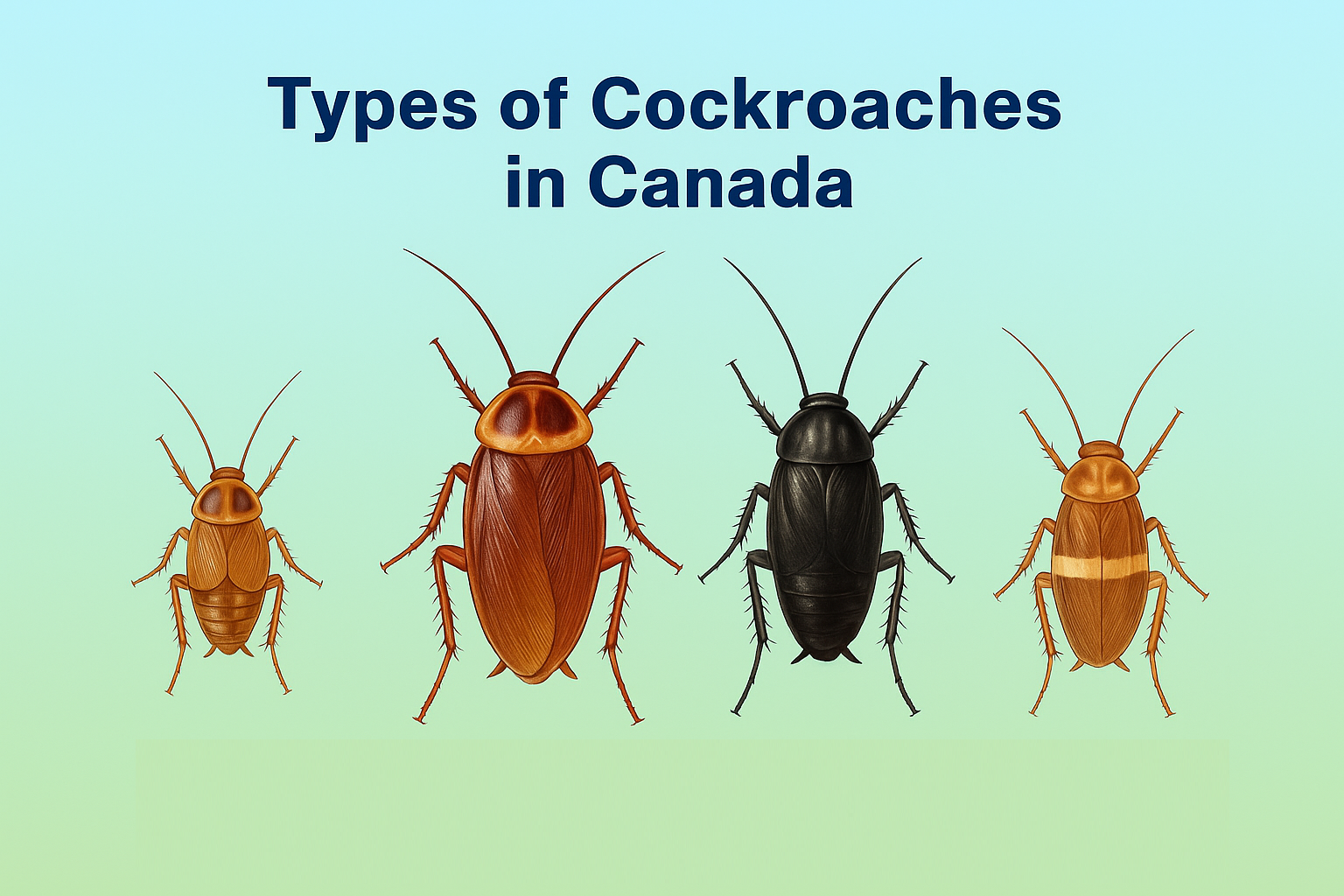
Understanding cockroach types helps you choose effective treatments.
German Cockroach
Small cockroaches measuring 1/2 to 5/8 inch long. A light-brown body marked by two dark stripes behind the head. Most common in urban areas, especially reported in Toronto and Montreal. They prefer kitchens and bathrooms where cockroaches and water sources exist.
American Cockroach
Reddish-brown giant roaches reaching 1.5 to 2 inches. American cockroaches have functional wings and they can fly. Found in basements, sewers, and commercial buildings across Ontario cockroach regions.
Oriental Cockroach
Dark brown to shiny black, reaching about 1 to 1.25 inches in size. These water roaches thrive in damp basements and crawl spaces. Most common in older Toronto neighborhoods.
Brown-Banded Cockroach
Tan with light bands across wings, about 1/2 inch long. Prefer dry, warm areas like upper cabinets and electronics. Less common but found in Alberta and Saskatchewan.
Step-by-Step Cockroach Elimination Plan
Follow this systematic approach for effective cockroach control.
Step 1: Inspection and Identification
Examine all rooms during nighttime hours when roaches are active. Use a flashlight to check behind appliances, inside cabinets, and around plumbing fixtures. Identify the species using online guides or photos. Document roach droppings photos, and locations for tracking progress.
Step 2: Sanitation Protocol
Clean thoroughly to eliminate food sources. Wipe counters with disinfectant daily. Vacuum cracks and crevices where roach fecal matter accumulates. Store food in sealed glass containers. Fix leaky pipes within 24 hours cockroaches need water more than food.
Step 3: Exclusion Methods
Seal entry points with caulk or copper mesh. Install door sweeps on exterior doors. Repair damaged window screens. Cover drain openings with metal screens. Apply weatherstripping around basement windows.
Step 4: Treatment Application
Apply cockroach bait gel in pea-sized dots along baseboards, under sinks, and behind appliances. Place cockroach traps near suspected activity zones. Dust diatomaceous earth for cockroaches in wall voids and attics, but only in dry areas where it remains effective.
Step 5: Monitor and Adjust
Check bait stations weekly. Replace consumed bait and relocate traps to active zones. Track population decline by counting roaches seen daily. Full elimination takes 2-4 weeks for cockroach control.
Natural Cockroach Control Methods
Home remedies for cockroaches work best for small infestations or as preventive measures.
Boric Acid Treatment
Mix boric acid for cockroaches with sugar (3:1 ratio). Apply light dustings in areas inaccessible to pets and children. Roaches ingest the powder while grooming, causing dehydration and death within 3 days.
Diatomaceous Earth Application
Food-grade diatomaceous earth and cockroach control rely on mechanical action. The powder damages the exoskeleton, causing moisture loss. Applying thin layers to thick piles repels insects. Does diatomaceous earth kill cockroaches? Yes, but only when dry.
Essential Oil Deterrents
Peppermint and eucalyptus oils act as cockroach repellent options. Mix 10 drops per cup of water in a spray bottle. Apply to entry points and baseboards. Reapply every 3 days as oils evaporate quickly.
Borax Solution
Borax for cockroaches combines with powdered sugar as bait. Mix equal parts and place in shallow containers near activity zones. Keep away from pets, as borax can kill roaches but poses toxicity risks.
Professional Cockroach Pest Control
Exterminators for cockroaches provide comprehensive solutions.
Gel Bait Treatments
Professionals apply cockroach killer gel in strategic locations. Products like Advion roach gel Canada contain fipronil or indoxacarb. Roaches consume the bait and return to nests, spreading poison through feces and cannibalism. Results appear in 3-5 days.
Insect Growth Regulators (IGRs)
IGRs prevent cockroach larvae from maturing. Combined with traditional insecticides, they break reproduction cycles. Effective for cockroach infestation cases with heavy baby cockroaches.
Fumigation Services
Cockroach fumigation uses gas treatments for severe infestations. Buildings remain sealed for 24-48 hours. All residents and pets must vacate. Reserved for extreme cases where other methods fail.
Monitoring Systems
Pest control for roaches includes the installation of monitoring traps. Professionals track population trends and adjust treatments accordingly. Follow-up visits occur every 2-4 weeks until elimination.
Cockroach Prevention Strategies
How to prevent cockroaches requires ongoing vigilance.
Kitchen Prevention:
- Clean spills immediately, including under appliances
- Store dry goods in sealed containers with tight lids
- Take garbage out daily using sealed bins
- Run the garbage disposal weekly with ice and lemon
Bathroom Protection:
- Fix dripping faucets and toilet leaks promptly
- Dry shower walls after use to reduce moisture
- Store toiletries in closed cabinets
- Clean hair from drains weekly
Whole-Home Tactics:
- Vacuum weekly including baseboards and furniture
- Declutter storage areas removing cardboard boxes
- Inspect packages before bringing them indoors
- Maintain 18-inch clearance between stored items and walls
Cost Comparison: DIY vs Professional Control
| Method | Cost Range | Effectiveness | Timeline | Best For |
| Bait Gel (DIY) | $20-40 | Moderate | 2-3 weeks | Small infestations (<10 roaches) |
| Diatomaceous Earth | $15-35 | Low-Moderate | 1-2 weeks | Prevention, dry areas only |
| Boric Acid Treatment | $8-15 | Moderate | 3-4 weeks | Light infestations, maintenance |
| Professional Inspection | $100-200 | N/A | 1 visit | Assessment and treatment plan |
| Professional Treatment | $150-600 | High | 1-3 visits | Heavy infestations (25+ roaches) |
| Ongoing Service Plan | $300-800/year | Very High | Quarterly | Prevention in high-risk buildings |
Cockroach pest control cost varies by infestation severity and building size. Apartments require building-wide coordination, often splitting costs among units.
Health Risks from Cockroaches
Are cockroaches dangerous? Yes, they pose significant health threats.
Disease Transmission:
- Can cockroaches carry disease? They spread Salmonella, E. coli, and 33 bacterial species
- Cockroach diseases include gastroenteritis and dysentery
- Contaminate food surfaces through roach fecal matter deposits
Allergy Concerns:
- Roaches and allergies affect 7-8% of the general population
- Proteins in droppings and shed skins trigger asthma attacks
- Children exposed to cockroach allergens show increased hospitalization rates
Can roaches make you sick? Direct contact isn’t necessary because airborne particles from dried feces cause respiratory issues.
Regional Cockroach Issues in Canada
Ontario
Cockroaches in Toronto report the highest densities in multi-unit buildings. The German cockroach dominates urban centers. Wood roaches in Ontario enter homes accidentally but don’t establish colonies; they prefer outdoor habitats.
British Columbia
Cockroaches in Vancouver face milder winters, allowing year-round activity. Coastal moisture benefits Oriental cockroaches in basement spaces.
Alberta
Are there cockroaches in Alberta? Yes, despite cold winters. In Calgary cockroach cases increased 15% in recent years. Indoor heating creates ideal conditions for German cockroach survival.
Maritime Provinces
Cockroaches in Nova Scotia and Halifax remain less common due to the climate. However, heated buildings still support infestations near food service areas.
When to Call a Professional Exterminator
DIY methods work for minor problems. Professional pest control for cockroaches becomes necessary when:
- Population indicators exceed thresholds: Seeing 25+ roaches daily or finding multiple cockroach nests
- Repeated treatment failures: DIY methods show no improvement after 3 weeks
- Multiple unit buildings: Roaches in apartment buildings require coordinated treatment
- Health concerns: Family members show allergy symptoms or respiratory issues
- Business requirements: Commercial spaces need licensed pest control near me for roaches
Cockroach exterminator Toronto services offer warranties and follow-up treatments. Pest control cockroaches’ costs justify themselves through faster elimination and prevention of re-infestation.
Do’s and Don’ts of Cockroach Control
DO:
- Act immediately when spotting signs of roaches
- Use multiple control methods simultaneously
- Focus on sanitation before applying chemicals
- Read all product labels for cockroach killer safety
- Keep treatments consistent for 4-6 weeks minimum
DON’T:
- Ignore small infestations, hoping they disappear
- Use roach spray as the only control method
- Apply diatomaceous earth in wet locations
- Scatter food-based baits if pets have access to the areas
- Assume cold weather will eliminate all roaches
Pros and Cons of Common Control Methods
Gel Baits
Pros: Targeted application, colony elimination, safe when applied correctly, effective for German cockroach control
Cons: Requires multiple applications, loses effectiveness if competing food sources exist, not ideal for large open areas
Insecticide Sprays
Pros: Quick knockdown of visible insects, covers large surface areas, provides residual protection
Cons: Repels roaches from treated zones, requires repeated applications, less effective than baits for colony elimination
Natural Methods
Pros: Lower toxicity risks, environmentally friendly, good for prevention, and combines with other strategies
Cons: Slower results, requires consistent application, less effective for heavy infestations, limited scientific backing
Professional Services
Pros: Comprehensive approach, guaranteed results, proper product access, trained application techniques
Cons: Higher initial costs, requires scheduling, may need multiple visits, potential for chemical sensitivity
Expert Insights on Cockroach Behavior
Understanding what cockroaches do helps improve control strategies. These insects exhibit thigmotropism, preferring tight spaces where their bodies touch multiple surfaces. This explains why they hide in cracks rather than open areas.
Cockroach life expectancy varies by species. German cockroaches live 100-200 days, while American cockroaches survive up to 2 years. How long can cockroaches live without food? They endure 30 days without eating but only 7 days without water.
Do cockroaches bite humans? Rarely, but documented cases exist in heavy infestations where food is scarce. Cockroach bite marks appear as small red welts, typically on fingers and eyelashes during sleep.
Can cockroaches fly? Some species have functional wings. American cockroaches fly short distances when disturbed. German cockroaches have wings but primarily glide rather than fly. Do roaches have wings? All adult cockroaches possess wings, though not all species use them for flight.
Final Recommendations
Succeeds through integrated approaches combining sanitation, exclusion, and targeted treatments. Start with thorough cleaning and sealing entry points. Apply bait gel and diatomaceous earth in strategic locations. Monitor progress weekly and adjust methods based on results.
For apartments or heavy infestations, professional services provide the expertise and products necessary for complete elimination. The investment in pest control for cockroaches prevents health issues and property damage that cost far more in the long term.
Take action immediately when signs of cockroaches appear. Early action prevents small issues from turning into major infestations. Your family’s health and your home’s comfort depend on maintaining a roach-free environment through consistent prevention and rapid response to new activity.
Frequently Asked Questions
What is the most effective pest control for cockroaches?
Gel baits combined with insect growth regulators are highly effective. They target hidden roaches, disrupt reproduction, and work continuously. Pairing them with sanitation, crack-sealing, and regular professional treatments ensures long-lasting results.
What gets rid of cockroaches permanently?
Permanent control requires eliminating food, water, and shelter, using gel baits, sealing gaps, fixing leaks, and maintaining deep cleanliness. Consistent professional treatments and monitoring prevent re-infestation and keep populations from rebuilding.
What kills roaches 100%?
No single product guarantees 100% elimination instantly, but a combination of gel baits, insect growth regulators, and residual insecticides offers the highest success. Removing moisture sources and sealing entry points ensures complete long-term control.
What is the best control for cockroaches?
Integrated Pest Management is best: gel baits, targeted sprays, sealing cracks, reducing moisture, and maintaining hygiene. This multi-step approach attacks roaches at all life stages and prevents future infestations more reliably than chemicals alone.
Which insecticide kills cockroaches faster?
Fast-acting insecticides like pyrethroids or cyfluthrin-based sprays provide quick knockdown. However, they work best when combined with gel baits and proper sanitation, since sprays alone rarely eliminate hidden nests or egg cases.
How to keep cockroaches away at night?
Eliminate food crumbs, keep counters dry, remove trash, seal cracks, and close drains. Use gel baits in hotspots. Reduce nighttime moisture and keep kitchen appliances clean to discourage roaches from emerging.
What smell do cockroaches hate?
Roaches dislike peppermint, eucalyptus, bay leaves, citronella, and tea tree oil. These scents can repel them temporarily but won’t eliminate infestations. Pair natural repellents with proper cleaning, sealing, and baiting for real results.
Which home remedy kills cockroaches?
Boric acid, baking soda mixed with sugar, and diatomaceous earth work well when placed in dry areas. These methods kill slowly, so they must be kept dry and combined with sanitation for effectiveness.
Can cockroaches climb walls?
Yes, cockroaches can climb walls, ceilings, and smooth surfaces due to tiny adhesive pads on their legs. This ability helps them hide in high, hard-to-reach areas, making thorough inspection and treatment essential.
What is the best homemade cockroach killer?
A mixture of boric acid, sugar, and flour is highly effective. It attracts roaches and poisons them after contact. Keeping it dry and placing it along roach pathways ensures better results.
How to spray a house for cockroaches?
Focus on cracks, crevices, under appliances, plumbing areas, and baseboards. Use residual insecticides, avoid over-spraying, and pair sprays with baits. Proper preparation, cleaning, and follow-up visits improve effectiveness.
What is not a low-risk method for controlling cockroaches?
Using strong, unregulated insecticides or foggers is not low-risk. They can expose people and pets to harmful chemicals, offer poor control, and miss hidden nests. Safer alternatives include baits, sealing, sanitation, and professional treatments.