


7007 Islington Avenue, Unit 207, Woodbridge, ON L4L 1V8
Quick Answer Box
Termites cause significant structural damage to Canadian homes, particularly in BC and Ontario, despite cold climates. Learn how to identify termite infestations through signs like mud tubes and hollow wood, understand different termite species, and implement effective control methods including professional treatments and DIY prevention strategies.
Essential Information:
- Subterranean termites are most common in Canada, building underground colonies
- Key warning signs include mud tubes, hollow wood, and winged termite swarms
- Professional treatments range from $1,000-$8,000 depending on severity
- Prevention focuses on moisture control and eliminating wood-to-soil contact
- Regular annual inspections help catch infestations before major damage occurs
Introduction
999999 When most Canadians think of pest control, they rarely consider termites as a major threat. Unfortunately, that’s a dangerous misconception. Termites are increasingly becoming a serious concern for homeowners, particularly in British Columbia and Ontario.
Termite control protects one of your most valuable investments: your home. These tiny insects can silently cause thousands of dollars in damage before detection. This comprehensive guide covers everything you need to know about termite control, from identifying warning signs to choosing the right termite exterminator and implementing prevention strategies.
What Are Termites? Understanding the Enemy
The Basics of Termite Biology
So, what is a termite? Termites are small, pale-colored insects that feed primarily on cellulose—the main component of wood. Often mistaken for white ants (though they’re actually more closely related to cockroaches), these creatures live in large colonies with a complex social structure that includes workers, soldiers, and reproductive members.
What does a termite look like? Worker termites, which you’re most likely to encounter, are typically creamy-white to pale brown, soft-bodied, and measure about 3-4mm in length. They have straight antennae, no visible waist (unlike ants), and avoid light, which is why they often go undetected for long periods.
There are also winged termites (swarmers or alates) that emerge during specific times of year to establish new colonies. These flying termites are often confused with flying ants, but you can distinguish them by their straight antennae, equal-length wings, and thick waists.
Types of Termites in Canada
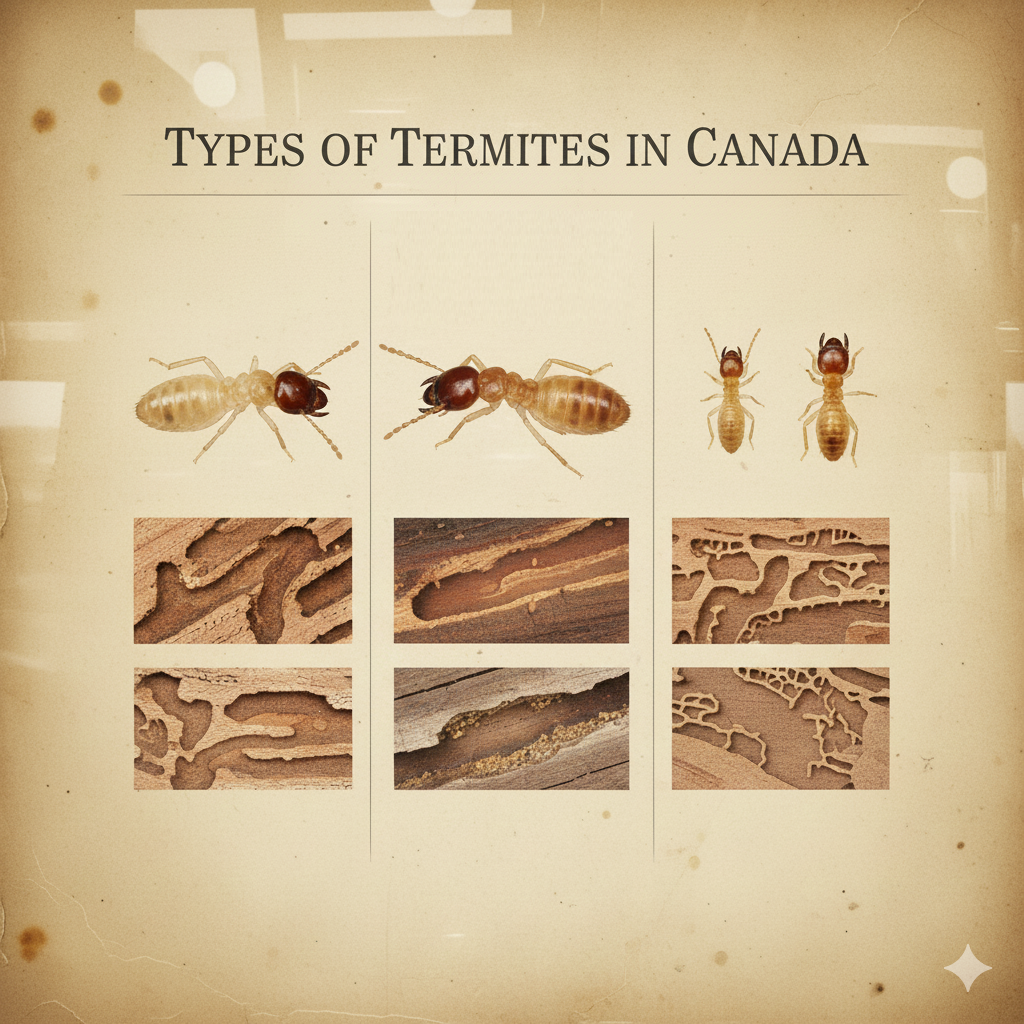
While Canada’s climate limits termite populations compared to tropical regions, several species have adapted to our conditions:
Subterranean termites are the most common and destructive type found in Canada. These insects build their colonies underground and create distinctive mud tubes to travel between their nest and food sources. The Formosan subterranean termite (Coptotermes formosanus), sometimes called the “super termite,” is particularly aggressive and can cause extensive damage rapidly.
Unlike other termites, drywood termites live entirely inside dry wood without any soil contact.While less common in Canada, they’re occasionally found in imported furniture or building materials.
Regional Presence: Are There Termites in Canada?
Are there termites in Canada? Absolutely. While many Canadians believe our cold climate protects us, termite populations are established in several provinces:
- Termites in BC (British Columbia): The mild coastal climate makes BC particularly susceptible to termite infestations, especially in the Vancouver and Victoria areas
- Termites in Ontario: Southern Ontario has documented termite populations, particularly around the Great Lakes region
- Termites in Alberta: While less common, termites in Alberta Canada have been reported, though the harsh winters limit their spread
Climate change is expanding the range of these wood-destroying organisms, making termite control an increasingly important consideration even in previously unaffected regions.
Recognizing the Signs: How to Know If You Have Termites
Early detection is crucial for effective termite control. How can you tell if you have termites? Watch for these key signs of termite activity:
1. Mud Tubes and Tunnels
One of the most distinctive signs of termites is the presence of mud tubes. Subterranean termites construct these pencil-width tunnels from soil, wood particles, and saliva to travel between their underground colonies and food sources while maintaining the moisture and darkness they need to survive.
Termite mud tubes are typically found along foundation walls, in crawl spaces, or connecting the ground to wooden structures. If you spot these termite mud tunnels, you likely have an active infestation.
2. Wood Damage
Termite damage to wood has a distinctive appearance. Unlike general wood rot, termite wood damage creates a honeycomb pattern inside the wood while leaving the outer surface largely intact. The wood may sound hollow when tapped and can appear blistered or darkened on the surface.
Termites in wood eat along the grain, creating galleries that weaken structural integrity. Subterranean termite damage often shows the presence of soil or mud-like material within the damaged wood.
3. Discarded Wings
Finding small, equal-sized wings near windows, doors, or other entry points is a strong indication of termites. Winged termites shed their wings after finding a suitable location to establish a new colony, a process known as swarming.
4. Frass (Termite Droppings)
Drywood termites produce small, pellet-shaped droppings called frass. These tiny, hexagonal pellets accumulate near termite entry points and are a telltale sign of drywood activity.
5. Hollow-Sounding Wood
How to tell if you have termites: Tap on wooden structures, particularly in basements, crawl spaces, and areas near the foundation. If the wood sounds hollow or papery, termites may have consumed the interior.
6. Swarms
Seeing termite swarms, groups of winged termites flying together, is one of the most obvious signs for termites. Swarms typically occur in spring when conditions are right for establishing new colonies.
7. White Ants in Your Home
If you see what appear to be white ants in walls or wood, they’re likely termites. Despite the nickname, these insects are distinctly different from ants and require specialized treatment.
The Hidden Risks: Why Termite Control Matters
Structural Damage and Safety Concerns
Termites are responsible for billions of dollars in property damage worldwide each year. In Canada, while the problem is less severe than in warmer climates, a single termite infestation can still cause extensive and expensive damage to your home’s structure.
These wood-destroying organisms don’t just affect aesthetics, they compromise structural integrity. Support beams, floor joists, wall studs, and even foundations can be weakened by termite activity, potentially creating safety hazards for occupants.
Financial Impact
Most homeowner insurance policies don’t cover termite damage, considering it a preventable maintenance issue. This means repair costs come entirely out of pocket. Termite damage can range from a few hundred dollars for minor repairs to tens of thousands for extensive structural rehabilitation.
Beyond repair costs, termite activity can significantly reduce property value and complicate home sales. A history of infestation, even if treated, must typically be disclosed to potential buyers.
Secondary Pest Problems
Termite infestations can attract other pests. Certain ants prey on termites, while moisture problems associated with subterranean termite activity can create conditions favorable for mold, fungi, and other moisture-loving pests.
Proven Solutions: How to Get Rid of Termites
Professional Termite Control Methods
When it comes to serious infestations, professional intervention is usually necessary. Here are the primary methods termite exterminators use:
Chemical Barriers (Termiticides)
Termiticide spray applications create a chemical barrier in the soil around your home’s foundation. When termites encounter treated soil, they either die or are repelled. Modern termiticides like those that replaced older chemicals such as chlordane (now banned) are more environmentally friendly while remaining highly effective.
The termiticide meaning refers to any chemical agent specifically designed to kill or repel termites. Professional-grade products provide longer-lasting protection than consumer options.
Baiting Systems
Termite bait stations are strategically placed around your property’s perimeter. These systems contain slow-acting toxins that worker termites carry back to the colony, eventually eliminating the entire population including the queen.
Termite traps attract foraging termites using wood or cellulose materials treated with growth inhibitors or toxins.. This method is less invasive than liquid treatments and can be highly effective for subterranean termite control.
Heat Treatment
For drywood termite problems, heat treatment involves raising the temperature in affected areas to levels lethal to termites (typically 120-140°F). This method requires no chemicals but needs specialized equipment and expertise.
Fumigation
For severe drywood infestations, whole-structure fumigation may be necessary. This involves tenting the entire building and introducing gas that penetrates all wood, killing termites at all life stages.
DIY Termite Control Options
For minor problems or prevention, homeowners can take several steps:
Boric Acid Products
Termite killer products containing boric acid can be applied to wood surfaces as a preventative measure. While not as effective as professional treatments for active infestations, they can deter termite activity.
Essential Oils
Orange oil and neem oil have shown some effectiveness against drywood termites when applied directly to infested wood. However, penetration is limited, making these best suited for accessible, localized infestations.
Beneficial Nematodes
These microscopic worms naturally prey on termite larvae and can be introduced to soil around your home. While not a complete solution, they can supplement other control measures.
When to Call a Termite Exterminator
How to exterminate termites effectively usually requires professional help if:
- You’ve confirmed active termite activity
- Damage is visible or suspected in structural elements
- Mud tubes are present
- You’ve seen termite swarms
- DIY methods haven’t resolved the problem
Look for licensed termite pest control specialists with experience in your specific type of infestation. Best termite companies will offer:
- Thorough termite inspection before treatment
- Written estimates and treatment plans
- Warranties or guarantees
- Follow-up visits
- Prevention recommendations
Prevention Strategies: Keeping Termites Away
Moisture Control
Since subterranean termites require moisture to survive, eliminating water sources is crucial:
- Fix leaky pipes, faucets, and gutters
- Ensure proper drainage around your foundation
- Use dehumidifiers in damp basements and crawl spaces
- Ventilate attics and crawl spaces adequately
- Grade soil away from your foundation
Eliminate Wood-to-Ground Contact
Termites need easy access from soil to wood. Prevention includes:
- Maintain at least 6 inches of clearance between soil and wooden structures
- Remove wooden debris, stumps, and fallen trees from your property
- Store firewood at least 20 feet from your home and elevated off the ground
- Replace wooden landscape ties and mulch with alternatives
Regular Inspections
Regular termite inspections are essential to protecting your home:
- Inspect your foundation, basement, and crawl space annually
- Look for signs of termites after winter thaw and in spring
- Check for mud tubes, wood damage, and discarded wings
- Pay special attention to areas with previous moisture problems
Barrier Methods
Creating physical barriers can deter termite access:
- Install stainless steel mesh or sand barriers during construction
- Use termite-resistant building materials when possible
- Apply protective coatings to exposed wood
- Ensure proper sealing around utility entry points
Professional Preventative Treatments
Consider preventative termiticide applications, especially if:
- You live in a high-risk area (termites in BC or southern Ontario)
- Neighboring properties have had infestations
- Your home has had previous termite problems
- You’re in a humid climate or near water
Termite Control Across Canada: Regional Considerations
British Columbia
With its mild, moist climate, BC faces significant termite challenges. Termites in BC are primarily subterranean species that thrive in coastal regions. Homeowners should be particularly vigilant about moisture control and regular inspections.
Ontario
Termites in Ontario are concentrated in the southern regions, particularly around Toronto, Hamilton, and the Niagara Peninsula. The presence of termites Ontario residents should watch for includes both native and introduced species.
Alberta
Are there termites in Alberta? Yes, but they’re less common due to the province’s colder, drier climate. However, heated buildings can provide suitable environments, so don’t assume you’re completely safe. Termites Alberta homeowners encounter are typically found in well-heated structures with moisture issues.
Understanding Termite Biology and Behavior
Life Cycle and Colony Structure
Understanding how termites live helps in effective control. A mature termite colony can contain hundreds of thousands to millions of individuals organized into castes:
- Queen: The reproductive female who can live 15-25 years
- King: The reproductive male
- Workers: The majority of the colony; they forage, feed others, and cause all the damage
- Soldiers: Defend the colony with large mandibles
- Alates: Winged reproductives that will establish new colonies
Baby termites (larvae) develop through molts into their designated castes based on colony needs.
Feeding Habits
Termites feed on cellulose found in wood, paper, cardboard, and other plant-based materials.Worker termites have specialized gut bacteria that help them digest cellulose, something most other insects cannot do efficiently.
Termites and wood have an inseparable relationship, these insects evolved specifically to exploit this abundant food source. They can detect wood through chemical signatures and moisture content.
Swarming Behavior
Termite swarms occur when a colony matures and produces winged reproductives. These swarmers emerge during specific conditions (usually warm, humid days following rain) to mate and establish new colonies. Finding evidence of swarms is one of the clearest signs of termites in a home.
Common Misconceptions and Termite Look-Alikes
Bugs That Look Like Termites
Several insects are commonly mistaken for termites:
Ants vs. Termites
Ants and termites are frequently confused, especially when both have wings. Key differences:
- Ants have a pinched waist; termites have a thick, straight body
- Ant antennae are bent; termite antennae are straight
- Ant wings have different sizes; termite wings are equal length
- Ants are often darker; termites are pale
Carpenter Ants
Carpenter ants also damage wood, but they excavate galleries for nesting rather than eating the wood. Their damage appears cleaner and more organized than termite damage, without the mud or soil mixture characteristic of subterranean termite activity.
The “White Ants” Myth
In many parts of the world, people refer to termites as “white ants.” This nickname creates confusion, as termites and ants are actually quite different insects requiring different control approaches. How to remove white ants is essentially asking how to eradicate termites, but using the wrong identification could lead to ineffective treatment.
The Cost of Termite Control
Professional Treatment Costs
Termite treatment costs in Canada vary widely based on:
- Severity of infestation
- Treatment method chosen
- Size of property
- Regional factors
- Type of termite
Expect to pay:
- Inspection: $150-$400
- Chemical barrier treatment: $1,000-$3,000
- Baiting systems: $1,500-$4,000 initial installation, plus monitoring fees
- Fumigation (if needed): $2,000-$8,000+
Long-term Prevention Costs
Preventative treatments are more affordable:
- Annual inspections: $100-$300
- Termite bait station monitoring: $300-$500 annually
- Preventative termiticide applications: $800-$2,000
While these costs may seem significant, they’re far less than repairing extensive termite damage to structural elements.
Conclusion: Taking Control of Your Termite Problem
Termite control in Canada requires vigilance, knowledge, and often professional assistance. While these wood-destroying organisms may seem like a problem exclusive to warmer climates, Canadian homeowners face real risks from several termite species adapted to our conditions.
The key to effective termite control lies in three areas: early detection, prompt treatment, and ongoing prevention. By understanding what termites are, recognizing the signs of termites in your house, and implementing both professional and DIY prevention strategies, you can protect your home from these destructive insects.
Remember that termite damage is rarely covered by insurance, making prevention and early intervention financially crucial. Regular inspections, whether DIY or professional—should be part of your home maintenance routine, especially if you live in higher-risk areas like coastal BC or southern Ontario.
If you discover signs of termites, don’t panic, but don’t delay either. Contact licensed termite exterminators for a thorough inspection and treatment plan. Modern termite treatment methods are highly effective, and when combined with proper prevention measures, can keep your home termite-free for years to come.
Your home is likely your largest investment. Protecting it from termites through proactive control measures and prompt response to infestations ensures that investment remains sound for decades to come.
Frequently Asked Questions
How do I know if I have termites?
How do you know if you have termites? Look for these key signs: mud tubes on foundations or walls, hollow-sounding wood, discarded wings near entry points, visible wood damage with a honeycomb pattern, and the presence of small, pale insects in damaged wood. If you suspect termites inside house walls or structures, tap on wood surfaces, termite-damaged wood sounds hollow or papery.
What’s the difference between subterranean and drywood termites?
Subterranean termites live in underground colonies and build mud tubes to access above-ground wood. They require contact with soil for moisture. Drywood termites live entirely within the wood they infest, need no soil contact, and produce distinctive pellet-shaped droppings. Treatment approaches differ significantly between these types.
What is the most effective termite treatment?
The most effective termite treatment depends on the termite type and infestation severity. For subterranean termites, liquid termiticide barriers combined with baiting systems typically work best. For drywood termites, fumigation or heat treatment may be necessary. Professional termite exterminators can assess your specific situation and recommend the optimal approach.
Can I treat termites myself?
While DIY termite control products exist, they’re generally less effective than professional treatments for active infestations. How to get rid of termites successfully usually requires professional intervention, especially for subterranean termite colonies that extend underground. DIY methods work best for prevention or very minor, localized problems with drywood species.
How long does termite treatment last?
Termite treatment longevity varies by method. Liquid termiticide barriers typically last 5-10 years, though soil conditions and product type affect duration. Baiting systems require ongoing monitoring and maintenance. Termite pest control isn’t usually a one-time fix—regular inspections and maintenance ensure long-term protection.
Are there termites in cold climates like Canada?
Yes, termites Canada populations are well-established despite cold winters. Termites in home environments survive cold weather because buildings provide warmth and moisture. Subterranean termites nest below the frost line, while drywood termites live entirely within the wood they infest. Climate change is also expanding termite ranges into previously unaffected areas.
How can you tell the difference between termite damage and other wood damage?
Termite wood damage has distinctive characteristics: a honeycomb pattern inside with the surface often intact, the presence of mud tubes or soil-like material (for subterranean species), and galleries that follow the wood grain. Damage from termites feels papery or hollow when probed, unlike rot from fungi which makes wood spongy or crumbly.
What attracts termites to a house?
Termites are attracted to moisture, wood-to-soil contact, and cellulose-based materials. Leaky pipes, poor drainage, wooden structures touching soil, mulch against foundations, and stored firewood near your home all increase risk. How do you get rid of termites long-term? Eliminate these attractants.
How fast do termites cause damage?
Termite damage progression depends on colony size and wood moisture content. A mature subterranean termite colony can consume about one pound of wood per day. Small colonies may take years to cause noticeable damage, while large colonies or aggressive species like Formosan termites can cause significant structural problems within months.