
Toronto has experienced a significant surge in bed bug infestations over the past decade, making it one of the most affected cities in Canada. These resilient pests can invade any home, regardless of cleanliness, causing discomfort, anxiety, and sleepless nights. Understanding how to identify, prevent, and eliminate bed bugs in Toronto is essential for every resident.
What are Bed Bugs?
Bed bugs are small, blood-feeding insects that have made a dramatic comeback in urban areas across North America. These nocturnal pests hide during the day and emerge at night to feed on human blood while you sleep. Unlike other household pests, bed bugs can thrive in the cleanest environments as long as they have access to their primary food source: YOU.
Bed bugs spread rapidly through apartment buildings, condominiums, hotels, public transit, and even single-family homes. They’re expert hitchhikers, traveling on luggage, clothing, furniture, and personal belongings. What starts as a few bugs can quickly escalate into a full-blown infestation within weeks due to their rapid reproduction rate. The key to managing bed bugs in Toronto is early detection and immediate action. The longer an infestation goes unnoticed, the more difficult and costly it becomes to eliminate.
What Do Bed Bugs Look Like?
Accurate identification is the first critical step in addressing a bed bug problem. Bed bugs (Cimex lectularius) have distinct characteristics that differentiate them from other household pests.
Adult Bed Bugs
Adult bed bugs are small, flat insects roughly the size and shape of an apple seed, measuring approximately 4-5 millimeters in length. Their coloration ranges from light tan to reddish-brown, becoming darker and more engorged after feeding. They have a broad, oval-shaped body with six legs, two antennae, and short, golden-colored body hair that creates a striped appearance.
Unlike flying insects, bed bugs cannot fly or jump. They move by crawling and are surprisingly fast travelers, capable of moving about one meter per minute. While this seems slow to humans, it’s equivalent to a person sprinting the length of a football field four and a half times in 60 seconds when scaled to their size.
Bed Bug Life Cycle
Bed bugs progress through seven distinct life stages: egg, five nymph stages, and adult. Understanding this life cycle is crucial because effective treatment must target all stages.
- Eggs: Bed bug eggs are tiny, pearl-white, and about the size of a pinhead (approximately 1 millimeter). Females lay between 200-500 eggs over their lifetime, depositing them in cracks and crevices near feeding areas. Eggs hatch within 1-2 weeks under favorable conditions.
- Nymphs: Baby bed bugs, called nymphs, look like smaller versions of adults. First-stage nymphs are translucent and pale yellow, making them extremely difficult to see with the naked eye. As they progress through the five molting stages, they become larger and darker in color. Each molt requires a blood meal, and nymphs can reach adulthood in 6-8 weeks under ideal conditions.
- Adults: Once they reach maturity, bed bugs can live for several months to over a year, depending on environmental conditions. They can survive extended periods without feeding, up to one year in some cases, which makes eliminating them particularly challenging.
Where Bed Bugs Hide
Bed bugs are masters of concealment due to their flat body shape. Common hiding spots include:
- Mattress seams, tufts, and buttons
- Box spring fabric folds and wooden frame crevices
- Bed frames and headboards, especially joints and screw holes
- Baseboards and carpet edges
- Behind loose wallpaper or peeling paint
- Inside electrical outlets and switch plates
- Behind picture frames and wall decorations
- In furniture cracks, especially upholstered items
- Inside books, clocks, and other bedside items
- Behind curtain folds and within curtain rods
While they’re called ‘bed’ bugs, these pests can be found anywhere within 3-6 feet of their feeding area, and severe infestations can spread throughout entire rooms or buildings.
Bed Bug Behaviours & Habits
Understanding bed bug behavior helps explain why they’re so difficult to eliminate and how infestations spread so quickly in Toronto’s urban environment.
Feeding Patterns
Bed bugs are obligate blood feeders, meaning they feed exclusively on blood to survive and reproduce. They’re primarily nocturnal, emerging from hiding spots during the night to feed on sleeping hosts. They’re attracted to body heat, carbon dioxide exhaled during breathing, and human odor.
A bed bug typically feeds for 5-10 minutes before returning to its hiding place. After feeding, adult bugs appear darker and more elongated due to the blood meal. While feeding, they inject saliva containing anticoagulants and anesthetics, which is why most people don’t feel the bite occurring.
Contrary to popular belief, bed bugs don’t live on human skin or hair. They prefer to remain close to their feeding area, hiding in nearby crevices and only venturing onto people to feed. However, they can attach themselves to clothing if someone sits or lies in an infested area for an extended period.
Reproduction Rate
Bed bug populations can double approximately every 28 days under optimal conditions. A single pregnant female can establish an entire infestation. This exponential growth explains why early detection is so critical, a minor problem can become a major infestation within a few months.
Movement and Spread
In Toronto’s multi-unit residential buildings, bed bugs spread through several pathways:
- Wall voids and utility lines: They travel through cracks in walls, along electrical wiring, and through plumbing penetrations between units
- Shared laundry facilities: Infested clothing and linens can transfer bugs between residents
- Hallways and common areas: Bugs can crawl between apartments through gaps under doors
- Personal belongings: They hitchhike on furniture, bags, clothing, and other items moved between units
In single-family homes, bed bugs typically arrive through:
- Luggage and clothing from travel
- Second-hand furniture, especially mattresses and upholstered items
- Visitors’ belongings
- Items from infested locations (storage units, workplaces, etc.)
Environmental Preferences
Bed bugs thrive in temperatures between 21-27°C (70-80°F), which is why heated buildings provide ideal conditions year-round. They’re highly resistant to many environmental challenges and have developed resistance to numerous insecticides, making them particularly difficult to control.
Signs & Symptoms of Bed Bugs
Early detection significantly improves treatment success rates and reduces costs. Toronto residents should regularly inspect their homes for the following indicators.
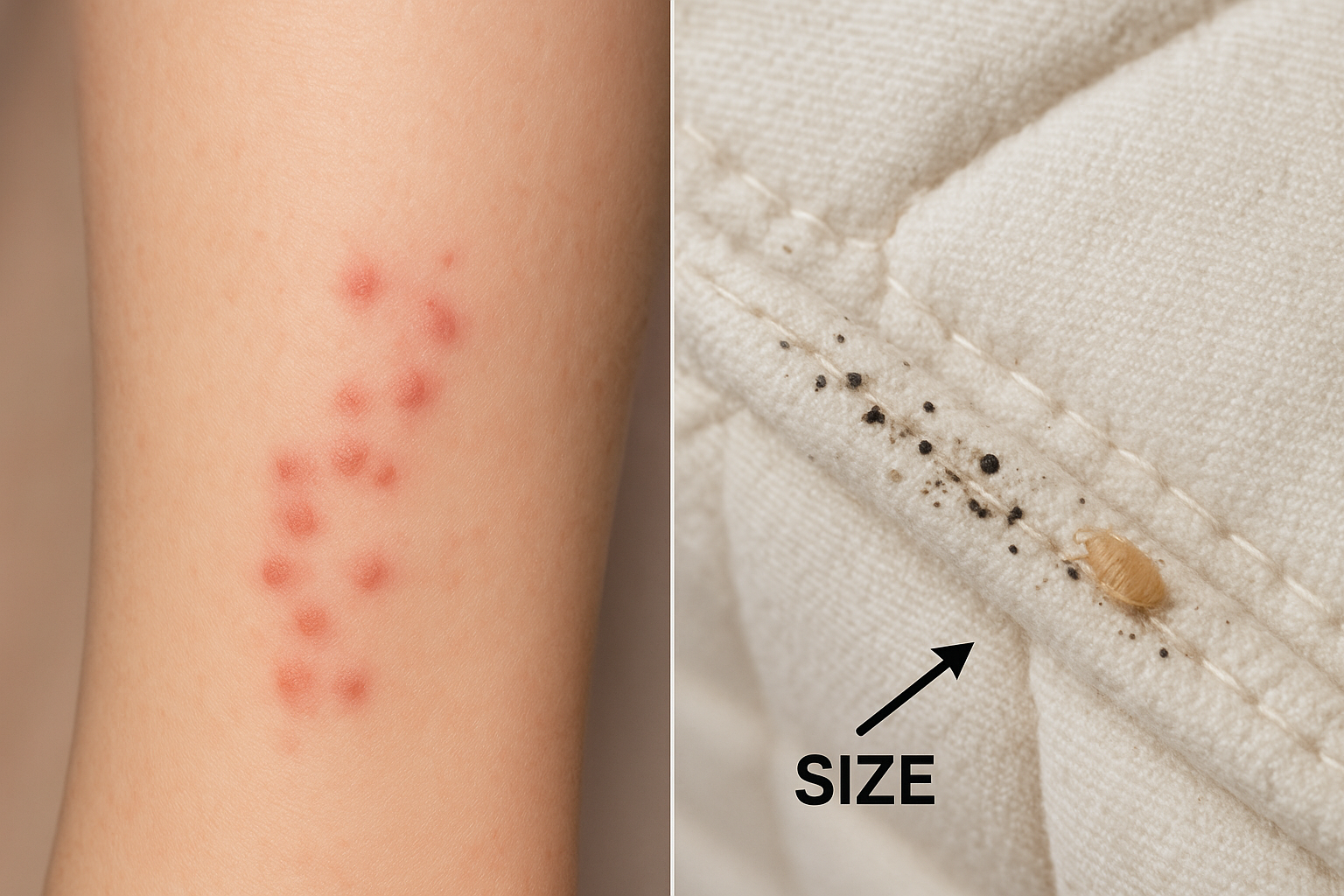
Visual Evidence
- Live or Dead Bed Bugs: The most definitive sign is finding the insects themselves. Check mattress seams, bed frames, baseboards, and other hiding spots with a flashlight during the day or a few hours before dawn when they’re most active.
- Eggs and Egg Shells: Look for tiny, white, oval-shaped eggs (about 1mm) and translucent shed skins in mattress seams, furniture crevices, and along baseboards.
- Fecal Spots: Bed bug droppings appear as small, dark brown or black spots on mattresses, sheets, walls, and furniture. These spots are digested blood and may smear when rubbed with a damp cloth, leaving a reddish-brown stain.
- Blood Stains: Small blood smears or spots on sheets and pillowcases occur when engorged bed bugs are crushed during sleep or when bite sites bleed slightly.
- Shed Skins: As nymphs molt through their five growth stages, they leave behind light brown, translucent exoskeletons that accumulate in hiding areas.
Olfactory Signs
A heavy bed bug infestation produces a distinctive musty, sweet odor often described as smelling like coriander or almonds. This scent comes from the bugs’ pheromones and is more noticeable in severe infestations.
Bite Symptoms
While bites alone cannot confirm bed bugs, they often provide the first clue. Bed bug bites typically appear as:
- Small, red, itchy welts on exposed skin
- Bites arranged in lines or clusters (often called “breakfast, lunch, and dinner” pattern)
- Most commonly on arms, legs, neck, face, and hands
- Reactions varying from no visible marks to large, inflamed welts
Why DIY Bed Bug Treatments Often Fail
Many Toronto residents attempt to handle bed bug infestations themselves to save money, but DIY approaches have significant limitations that often result in wasted time, money, and worsening infestations.
Inadequate Coverage
Over-the-counter sprays and foggers only kill bed bugs on contact and provide minimal residual protection. Bed bugs hide deep in cracks, crevices, wall voids, and inside furniture where DIY products cannot reach. Treating visible surfaces leaves the majority of the population unharmed, allowing them to repopulate quickly.
Behavioral Adaptations
When bed bugs detect chemical irritants, they scatter to untreated areas, spreading the infestation throughout your home or to neighboring units in apartments. This phenomenon, called “dispersal,” makes the problem worse by establishing new colonies in previously unaffected areas.
Insecticide Resistance
Bed bugs in Toronto have developed significant resistance to many common insecticides, particularly pyrethroids found in most store-bought products. Using ineffective chemicals repeatedly only strengthens resistance in surviving populations. The Environmental Protection Agency confirms that bed bugs have developed significant resistance to many common insecticides…
Incomplete Treatment
Successful bed bug elimination requires treating all life stages: eggs, nymphs, and adults. Most DIY products don’t kill eggs, which means new nymphs will hatch within weeks, restarting the infestation cycle. Multiple treatments timed to address hatching cycles are necessary but rarely executed properly in DIY efforts.
Lack of Expertise
Professional exterminators have training in bed bug biology, behavior, and hiding patterns. They know where to look, what products to use, and how to apply them safely and effectively. Homeowners lack this specialized knowledge, often missing hidden infestations or using products incorrectly.
How to Prevent Bed Bugs?
Prevention is far easier and less expensive than elimination. Toronto residents can significantly reduce their risk by following these comprehensive strategies.
Home Maintenance
Reduce Hiding Spots: To minimize potential bed bug habitats, seal cracks and crevices in walls, baseboards, and flooring. Fill gaps around baseboards and crown molding, and repair damaged plaster or drywall. Additionally, seal openings where pipes and wires enter walls to eliminate entry points.
Regular Decluttering: Minimize clutter in bedrooms and living areas to reduce hiding places for bed bugs. Store items in sealed plastic containers rather than cardboard boxes, as plastic provides better protection. Keep floors clear around beds and furniture to make inspection easier. Organize closets to allow easy inspection and vacuum regularly, including under beds and furniture.
Vigilance with Second-Hand Items
Toronto’s thriving second-hand market poses bed bug risks. Before bringing any used items home, take proper precautions to avoid infestation.
- Furniture Inspection: Thoroughly examine all seams, joints, and undersides of furniture pieces. Use a flashlight to check dark crevices and look for live bugs, shed skins, eggs, and fecal spots. Avoid items with fabric or upholstery if possible, and never take furniture left curbside, as it’s often discarded due to bed bugs.
- Clothing and Textiles: Inspect clothing carefully before purchase, examining tags, seams, and pockets carefully. Immediately wash and dry items on high heat before wearing, and store purchases in sealed plastic bags until laundered to prevent any potential bugs from spreading.
- Electronics and Books: Be especially cautious with these items, as they provide many hiding spots for bed bugs. Inspect thoroughly with a magnifying glass to detect any signs of infestation. Consider heat treatment in sealed containers if concerned about potential contamination.
Travel Precautions
Hotels and accommodations are common bed bug sources. Toronto travelers should take careful precautions both during their stay and upon returning home.
- At Your Destination: Keep luggage on bathroom tile or luggage racks, never on beds or floors. Inspect the room before unpacking by checking the mattress seams, headboard, and furniture. Pull back sheets to examine mattress edges and box spring, and check behind headboards, as most can be lifted off wall mounts. Look for fecal spots on walls near the bed, and request a room change if any signs are found, choosing a non-adjacent room.
- Upon Returning Home: Unpack directly into the washing machine if possible to contain any potential hitchhikers. Vacuum luggage thoroughly before storing and wash and dry all clothing on high heat for 30 minutes or more. Inspect luggage for bugs before storage and store luggage away from bedrooms in areas like the basement, garage, or storage area.
Multi-Unit Building Considerations
Toronto’s abundant apartment and condominium buildings require special vigilance due to the ease with which bed bugs can spread between units. Use door sweeps to seal gaps under doors and notify building management immediately if bed bugs are found. Be cautious in shared laundry rooms and transport laundry in sealed plastic bags. Inspect packages and deliveries before bringing inside, and report infestations in common areas to management. Consider preventive treatments if neighboring units are infested to protect your own space.
Public Space Awareness
Bed bugs can be encountered in Toronto’s public spaces, requiring awareness and precautions.
- Public Transit: Avoid placing bags on seats and keep them on your lap instead. Don’t sit on upholstered seats when possible, and inspect clothing after riding crowded transit to ensure you haven’t picked up any unwanted passengers.
- Workplaces and Schools: Keep personal belongings in sealed plastic bags to prevent bed bug transfer. Don’t share coats or bags on communal hooks, and inspect break room furniture before extended sitting to check for signs of infestation.
- Entertainment Venues: Be cautious in movie theaters, especially those with fabric seats. Avoid placing coats on seats and use your lap instead. Check seats quickly before sitting for long periods to identify any potential problems.
Protective Products
- Mattress Encasements: Invest in certified bed bug-proof encasements for mattresses and box springs to create a protective barrier. Choose encasements labeled specifically for bed bugs, not just dust mites, and ensure complete coverage with no tears or gaps. Keep encasements on for at least 18 months to ensure any trapped bugs die from starvation.
- Interceptor Traps: Place interceptor traps under bed legs to trap climbing bed bugs before they reach your sleeping area. Monitor traps weekly for early detection of any infestation. Ensure beds don’t touch walls and bedding doesn’t touch the floor to maximize the effectiveness of these traps.
When to Call a Professional
Professional pest management is essential for effective bed bug elimination in Toronto. Understanding what to expect helps residents make informed decisions. Contact a licensed pest control company like SafeHome Pest Services immediately for an initial inspection if you:
- Find live bed bugs or multiple signs of infestation
- Have tried DIY methods without success
- Live in multi-unit housing (to prevent spread)
- Have vulnerable household members (elderly, young children, those with allergies)
- Need documentation for landlord or insurance purposes
Conclusion
Bed bugs in Toronto present a significant challenge for residents, but they can be effectively managed and eliminated with the right approach. Early detection, prompt action, and professional treatment are the cornerstones of successful bed bug control. With proper management, you can reclaim your home and enjoy peaceful, bite-free sleep once again. If you suspect or confirm a bed bug infestation in your Toronto home, contact SafeHome Pest Services immediately for inspection and treatment. The sooner you act, the easier and less expensive the elimination will be.
Frequently Asked Questions (FAQs) About Bed Bugs in Toronto
How to know 100% if you have bed bugs?
Look for live bed bugs (4-5mm, reddish-brown), tiny pearl-white eggs, dark fecal spots on mattress seams, blood stains on sheets, and shed skins. Check bed frames, baseboards, and furniture crevices with a flashlight. Professional inspection provides definitive confirmation.
How to avoid bed bugs in Toronto?
Seal cracks in walls and baseboards, inspect second-hand furniture thoroughly, never take curbside items, use mattress encasements, keep luggage off hotel beds, wash clothing on high heat after travel, and place interceptor traps under bed legs for early detection.
What kills bed bugs 100%?
Professional heat treatment (50-57°C) kills all life stages including eggs. Licensed exterminators use specialized equipment and chemical treatments with residual protection. Washing items on high heat for 30+ minutes also eliminates bed bugs. DIY products often fail due to insecticide resistance.
Does Toronto have a bedbug problem?
Yes, Toronto has experienced significant bed bug surges, making it one of Canada’s most affected cities. Infestations spread through apartment buildings, condominiums, hotels, public transit, and shared laundry facilities due to the dense urban environment and high population mobility.
Do bedbugs stay in pillows?
Yes, bed bugs hide in pillow seams, folds, and zippers, though they prefer mattress seams and bed frames closer to sleeping hosts. Wash and dry pillows on high heat for 30+ minutes. Use certified bed bug-proof pillow encasements for prevention.
What country has the worst bed bug infestation?
The United States reports the highest rates, with major cities like New York and Chicago heavily affected. Canada, particularly Toronto, experiences significant problems. European countries, including the UK, France, and Germany, also report increasing infestations due to international travel and insecticide resistance.
How to eliminate bed bugs in Toronto, Canada?
Contact licensed pest control immediately for professional heat treatment (50-57°C) or chemical applications. Launder all items on high heat for 30+ minutes, vacuum thoroughly, seal cracks, and use mattress encasements. Multiple treatments necessary; DIY methods often fail.